Views from the Edge

Welcome to the CRC blog, where we discuss bleeding edge issues around sustainable community development. The term ‘bleeding edge’ connotes the idea of our failure to somehow or other convince the publics about the urgency of responding to climate change now, and that we need to better communicate the principles and practises of sustainable development to the wider publics. So, yes it takes courage to be 'at the edge', and sometimes one 'bleeds' a lot, but let's start the conversation now. I encourage our students and former students to use this blog and share what they are learning out in the real world.   Ann

The Good Society--Screw business as usual

Richard Branson is using his purchase of British bank Northern Rock to offer small loans to the poor and urged Wall Street bankers to use their bonuses to help repair the economic damage they caused. His book, Screw Business as Usual, urges companies to not only focus on profit, but also on doing good for the world. "Microcredit has worked in Africa and India, maybe it could even work in somewhere like the United Kingdom". Microfinance traditionally targets women and, anlaysts say, has default rates of just a few per cent.

Everyone Can Make a Difference

This is a powerful video. No need to say anything more, simply watch it and start today.

The Good Society--The Need for Conversation

A very thoughtful reflection on our use of technology, which some believe may be taking us to places we may not want to go. Technology is changing relationships, redefining the meaning of a ‘friend’, how we relate to one another, and most critically, our capacity for reflection. Technology creates the illusion of companionship without the demands of friendship. Are we sacrificing conversation for connection?

The Good Society--Gathering the Evidence

Governance in the good society is grounded in integrated and evidence-based decision-making based on the science and research circulating widely in society. This carbon map is an example of such evidence, as over 95% of the world's scientists now concur that we are indeed changing the climate as a result of human impacts. We need to think carefully about our own perceptions of what our governments say they are doing on our behalf and what decisions are actually being made. Governments are only as accountable as we make them.

The Good Society--Connectivity

In my last post, I talked about the importance of walkability to individual and community vitality. The good society is also about places that have space to meet, run into one another and connect in diverse ways. Culture is dependent upon the informal interactions we have the opportunity to make with one another, and I would argue, with other species. Density also matters, “which is why cities matter [in the production of culture].

The Good Society--Individual Leadership

Somebody has to do something, it is just incredibly pathetic it has to be us. (Gerry Garcia)

The Good Society--Fearless Leadership

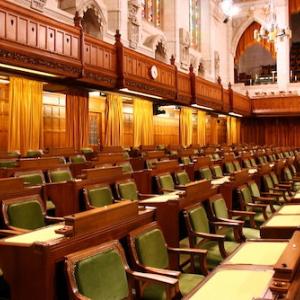
In the good society, we have the courage to face the big ‘sticky’ questions, and are not an ostriches stinking our heads in the sand. This requires unprecedented leadership independent of vested interests arguing to maintain the status quo. People in the good society direct their policy-makers to think and plan strategically around critical issues of the day.

A Must Read for Policy-Makers Everywhere

What is the possibility of achieving a 2-degree future now? What are the global impacts of continuing low-income industrialization in India and China. India's GDP per capita is presently 1/3 that of China, with a huge scope for very high growth rates. This has fundamental implications for mitigation and adaptation analysis and policy, globally and for all nations. Most likely, we will see a 4-degree future. What are the ramifications for human society?

The Good Society--Hedonistic Sustainability

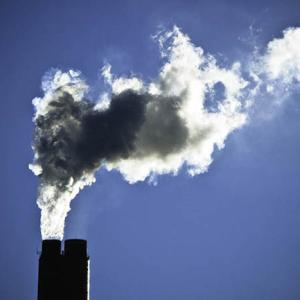
Did you know that 97% of homes in Copenhagen have district heating? Listen to architect Bjarke Ingels talk about the design challenge, how to build units sustainability with architectural alchemy and public participation, create spontaneous social encounters, and a public service market place. How do we take the symbol of the problem and turn it into fun--a CO2 smoke ring? How does a power plant in Copenhagen include a park and a man-made mountain for skiing?

The Good Society-Fuel and Economic Well-Being

Fuel exports and GDP, what does this graph mean for Canada’s future vitality, especially given scenarios of peak oil and our dependence upon non-renewable resources? With our economic well-being so tied to the export of fuel, and the increasing world-wide demand of newly industrialized countries (NICs), such as China and India, what does this mean for our own energy security, and sovereignty, especially given the increasing investment by China in the Alberta Tar Sands? And yet, this country’s economy is so very reliant on natural resources; a good society asks, 'at what cost?'