|
This is curriculum-based dialogue is led by Roberta Martell and co-moderated by Ann Dale.
While looking for leadership models to explain my experiences with social change, I found business-based leadership models inadequate, in part because the fiscal leverage at their root is not one that underlies social change. 'It seems that as a consequence of the business paradigm, leadership itself has become a commodity.' (Wilcox, 2004) 'You can have it or you may not have it… if I have it I can hand some of it to you…The right title or letters after my name will allow me to have it.' My experience is that everyone leads, through their very actions, and I couldn't find a model that reflected this. Studying complexity, (chaos, synchrony and networks) I learned that in the world of non-linear dynamics, cause and effect are so diffuse that leaders are virtually impossible to identify! In the natural world of complex adaptive systems, where connections produce vast and interdependent webs of relationships, no one is in the lead! Certainly, some people (and positions) have more influence than others, but to a great degree, the uncoordinated actions of 6 billion people on the planet result in the synergistic or 'emergent leadership' of the world.
Nevertheless, as people attempting to lead, whether in business, politics, sport, volunteer coordination, community development or anything else; how do we incorporate this emergence into our leadership designs. I suggest that leadership be thought of as attempts to influence ongoing change. To influence change then, we first need to recognize it. I found that the patterns in nature that accompany change are potentially analogous to change in human systems. Where are you within the web? Can you 'propriocept' the 'tipping points'? What type of links do you have, and what 'social capital' can you exercise to 'influence' change? In this e-dialogue I hope to examine the concepts of emergent leadership and designed leadership, and discuss how the two are related.
The e-Dialogue will be based around the following questions:
1. What is leadership?
2. What are emergent and design leadership?
3. How do the two affect each each other?
4. How do we consult emergence to best implement design?
| Research Context |
complete e-Dialogue (pdf) |
|
|
| Introduction |
|
Part of my research is a broad interdisciplinary literature review. I have attempted here to pull together highlights of my thoughts, as they were influenced by my readings. This thought cloth is woven from some of the best quotes, tied together with my reflections.
In concert with all this, biomimicry is [sic] showing us that nature is the ultimate inventor, and that there is much that we as observers do not know - perhaps cannot know. … To emulate nature, our first challenge is to describe her in her terms… Natural processes and designs will finally be the standards to which we aspire (Benyus, 1997, p. 237).
I find business based leadership schema to be of limited use in describing my experiences in influencing social change. I listened to the language of nature to echo the diffuse yet far reaching consequences of attempting to influence social change.
Ecological literacy requires systemic thinking - thinking in terms of relationships, context, patterns and processes (Capra, 2002, p. 265).
So, I am 'aspiring' to describe influence and social change in nature's terms, and will do that using Capra's framework of 'relationships, context, patterns and processes.'
|
| Relationships and Context |
|
|
I have to say they're too similar to discuss separately. Relationships are the connections, and context imbibes text with meaning.
"So to speak the language of the new physics we must learn a vocabulary in which process is more important than, and prior to, stasis….The universe of events is a relational universe. That is, all its properties are described in terms of relationships between the events" (Smolin, 2002, p. 52).
Leadership, in my definition, is the facilitation of connections; of weak or strong catalysts who reach beyond themselves whether through thought or deed, to enable connections. In Hole in the Universe, K.C. Cole (2001) quotes Lee Smolin,
"Connections, in other words, may be all there is to something. The only difference between something and nothing may be that something has connections. Something is connections" (p. 163).
…and if "something is connections", then changing the context changes the relationship which changes the connections which relationally changes that very something… within interdependent, iterative, holarchic systems.
"Some have argued that tacit constructions of self-other relations (at least in some cultures) are 'meta' to other constructions and that, at times, they might contradict other text-context relations simultaneously being (re)constructed. What Bateson and his colleagues spoke of as the 'double bind' is a well known example, as is ordering someone to volunteer. Relational arguments, by proposing that co-ordinations involve multiple text-context relations, many of which already are in place, many of which are implicit, and some of which are 'meta' to others, suggest that paradoxical or contradictory relations may be commonplace. So, implicit and contradictory reproductions that include subject-object relations may be one reason why attempts at change e.g., in formal theories of leadership or in leadership training, may fail. Relational arguments allow us to go beyond notions of 'power over' to include something like 'power to' (see e.g., Gergen,1995; Hosking, 1995) - power to reconstruct or to change ways of relating and therefore, constructions of self and other in relation"
(http://staff.abs.aston.ac.uk/dmh/ltrgfin.html accessed Feb 19, 2003).
|
| Patterns |
|
|
Relationships between result in patterns.
Patterns in space.
Patterns in time-synchrony.
Patterns in energy-resonance /dissonance.
Patterns in relationship
Physicists describe the building blocks of our universe as patterns.
"…there are no things, only geometric relationships. Space ceases to be a place where objects such as particles bump and jitter and instead becomes a kaleidoscope of ever changing patterns and processes" (Scientific American, Dec 2002).
And out of those building blocks of patterns, we too can be seen as patterns.
"Energy moves in waves. Waves move in patterns. Patterns move in rhythms. A human being is just that; energy, waves, patterns. Nothing more. Nothing less. A dance" Gabrielle Roth
Moreover interpersonal relationships can be described as patterns.
Synergic inquiry (SI) "is based on a grand pattern -- the Synergy Principle -- which Gregory Bateson (1979) called "the pattern that connects." This pattern is found in many natural sciences, social sciences, theories of evolution of the universe (of matter, life, and mind), Eastern wisdoms such as Taoism, the I-Ching philosophy, and integral philosophy, and in Western Hegelian dialectics (Tang, 1996; Tang & Joiner, 1997). The Synergy Principle is defined as the rhythmic dance of differentiating and integrating which facilitates the evolution of consciousness in matter, life, and mind." (Tang, Y. http://www.edst.educ.ubc.ca/aerc/1997/97tang.html).
There's what is. There's what isn't. In fact, what is allows what isn't, not to be. This is the text-context relationship expressed within positive and negative space. The profile of two faces that are placed in such a way as to balance the field and ground; the positive and negative so that either a vase in the centre, or two faces on either side are perceived. Our minds are pattern recognizers. Work with perception and optical illusion has shown that even when only a portion of a pattern is flashed before subjects' eyes, their minds anticipate and complete the pattern, be it the layout of dots on dice, or a partially completed circle.
Despite the optical limitations of visual perception, most of us, in day to day situations, can discern between what is, and what isn't. The tension and movement from what is to what isn't, reconciling the tensions… that's the definition of change.
"The other, equally important aspect, I insisted, has to do with the recognition of patterns. The new physics, in particular, implies a shift from isolated building blocks, or structures, to patterns of relationships. "That notion of a pattern of relationships," I speculated, "seems to be closer, somehow, to the idea of quality. And I feel that a science concerned primarily with networks of interdependent dynamic patterns will be closer to what you call 'science for understanding" (Capra, http://www.wie.org/j11/schumcapra.asp).
|
| Processes |
|
|
There seem to me to be two distinct processes. There is the world as it emerges, and the world as it is designed.
Working with patterns and (being aware of and integrating patterns).
"Throughout the living world, the creativity of life expresses itself through the process of emergence. The structures that are created in this process- the biological structures of living organisms as well as social structures in human communities- may appropriately be called 'emergent structures'. Before the evolution of humans, all living structures on the planet were emergent structures. With human evolution, language, conceptual thought, and all the other characteristics of reflective consciousness came into play. This enabled us to form mental images of physical objects, to formulate goals and strategies, and thus to create structures by design" (Capra, 2002, p. 119-120).
Consciousness is a property that is emergent relative to levels of complexity within organisms. (Kaufman, Stewart) Although consciousness has certainly enriched human life, I would also argue that the largest single negative impact of consciousness is in our ability to supplant our willingness with into willfullness over, our co-evolution with nature to a co-opting of nature, and to deaden our perception of the emergent DRIFT of natural systems into a disrespectful and completely unsustainable belief in our ability to STEER. the design.
My aim, therefore, is to re-cognize an eco-model of natural dynamics and processes that precede human wilfulness in order that we may re-align our attempts to influence with models that are aligned to nature's history and language of sustainability.
"Perhaps the biggest of these questions is whether life fundamentally differs from inorganic matter and processes, or whether it is just a rather striking example of entirely normal inorganic processes that have gathered momentum, like a runaway train, until their consequences have dominated the history of our planet"(Stewart, 1998, p.7).
Before there was our consciousness, and our ability to design, there was evolution and emergence.
Human organizations always contain both designed and emergent structures (Capra, 2002, p. 120).
So we are not faced with an either/ or choice, rather, the opportunity to understand the relationship between emergence and design, as we attempt to influence our world.
"The issue is not one of discarding designed structures in favor of emergent ones. We need both. In every human organization there is a tension between its designed structures,…and its emergent structures… Skillful managers understand the interdependence between design and emergence. … Finding the right balance between design and emergence seems to require the blending of two different kinds of leadership" (Capra, 2002, p.121).
What are these two types of leadership? Are they emergent and designed leadership? What does emergent leadership look like? What does designed leadership look like? What is their relationship to one another? How might this model facilitate our attempts to influence change?
*citations are available here.
|
| Co-Moderators |
complete e-Dialogue (pdf) |
|
|
|
|
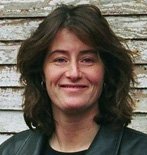
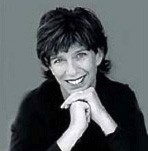
Ann Dale, Professor, Science, Technology & Environment Division, Royal Roads University
|
Roberta Martell, MaLT learner and co-moderator, Royal Roads University.
|
| Panelists |
Scott Davis, Renewable Energy project developer, author
Scott Davis is an award winning renewable energy project developer. His projects have been featured as case studies by Natural Resources Canada and the Canadian Renewable Energy Guide.
He is the author of "Microhydro: Clean Power from Water" coming out soon from New Society Publishers. It has been chosen by Mother Earth News for its "Wiser Living Series".
Scotty dropped out of graduate school in the Communication Studies department at Simon Fraser in 1977 to work on, among other things, a village scale microhydro system for an ecovillage/intellectual dude ranch sort of effort in a remote area west of Lillooet BC.
In the decades that followed, he lived and worked in the offgrid environment, gaining valuable experience in renewables, falling off lots of horses and generally having a great time.
An injury allowed him to retire in Victoria, where he lives with his partner Bonnie Mae.
His latest project is a 22 minute documentary about microhydro called "Water to Wire".
Karen Dawson, Leadership Development Specialist, Associate Faculty, Royal Roads University
|
|
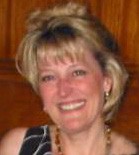
Learning and leadership form the backbone of Karen's unique work experience. President of CREATE NOW Leadership Development (http://www.createnow.ca). Karen supports leaders to learn, grow and excel. She coaches and facilitates with a strong belief that each of us can create the team, the organization, and the life that we want.
|
|
As consultant, facilitator and executive coach, Karen challenges clients to perform at their peak. Her clients are diverse and include law firms, chartered accountants, school principals, business owners, theatre companies, and healthcare leaders.
Grounded in theatre training as an actor and director, Karen has a passion for improvisational theatre and the learning that evolves when we open ourselves up to the possibilities that exist "in the moment," and when we let go of needing to know.
With seven years experience as a flying instructor with the Canadian Military Air Reserve, combined with twelve years in the public education system, Karen brings a variety of perspectives to growing leaders at all levels of an organization. With a passion for effective dialogue and innovative leadership, Karen has a strong commitment to create learning environments that engage and challenge.
|
Judy Lorinczi, Ministry of Children and Families, MaLT learner, Royal Roads University
|
|
In Hungarian (my first language), "to be whole," means both: "to be healthy" and "to be complete". I didn't start learning English until I was 17 years old, and the idea of separating the two concepts was almost incomprehensible to me. Having been influenced in my early years by the philosophy of "wholeness", as a natural reference to being a complete and healthy human being, had a tremendous influence on my present research on a "Holistic approach to organizational learning". So in all my 25 years of having worked in Public Sector organizations when people talked about the "Whole Organization", in my Hungarian heart I have always thought the reference is to a "healthy" and "complete" organization.
|
|
Most of the time this was of course not reflected around me. So, I was always puzzled, by the reference. Through my Royal Roads experience and Roberta Martell's friendship I have discovered the world of Chaos and Complexity and have developed an interest in the 'relational universe' and the topic of 'emergence', and how these concepts relate to leadership and learning in an organizational context.
I have worked in the area of Human Resource management, as a "generalist " for 25 years. During my career I have been involved in numerous areas of Organizational Development, and Labour Management, and have worked with professionals from the Health and Social Services fields. While my area is considered to be part of "administration", I have always worked closely with professionals whose work related to service delivery to the most vulnerable people in our society. Their work is significantly influenced by individual emotions, relationships and intuition, the often unspoken and largely taboo, but nevertheless very real aspects of their profession. It is with great interest that I participate in this e-dialogue, which touches on many of these existing, but thus far largely ignored, areas of organizational life.
|
Brian Malone, Social Planner, MaLT Learner, Royal Roads University
|
|
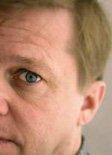
When Roberta asked for a brief Bio with picture, I explained that I'm 'photo adverse'. I'm not photogenic. It's sort of a Dorian Gray thing with no upside; the picture looks bad, and I get older anyway. But through the magic of digital photography, I've managed a photo that could have been inspired by Wilson from 'Tool Time' (the guy that hides behind the fence). Be kind.
|
|
I'm a planner by profession (Member Canadian Institute of Planners). My career started with community-based planning; then land use planning as a planning director in a rural and small town area in Nova Scotia; community economic development in rural areas of Nova Scotia; a brief and painful (but financially adequate) period as a development consultant; a few years as a policy planner in Saint John, New Brunswick; a few more years as manager of corporate projects for the City of Saint John; and the past five years as Manager of Planning and Policy for the Saint John Police Force. This current engagement has been especially rewarding; the Force is committed to very progressive values of constant improvement, organization-wide leadership, and learning organization. Who would have expected this from a police department? And it's my job to make it happen.
In more than twenty years I've been both frontline and ivory tower in planning and community development - but I've always been grounded in a commitment to excellence in public service. As community, we deserve paradigms that respect our culture and make the most of our potential. And often, that means finding and building the capacity for leadership within community. This is the way to excellence in public service.
My MALT experience to-date has introduced me to the concept of emergent learning …some very exciting things happening there. And from a recreational perspective, my time at MALT makes me wish I could pack my kayak as luggage on Air Canada, and tour the Strait. Gotta love that West Coast paddling!
|
Peter Robinson, President, Mountain Equipment Coop & MEC's Sustainability Team
Peter Robinson is CEO of Mountain Equipment Coop, a retail consumer co-operative whose core purpose is "to support people in achieving the benefit of self propelled wilderness oriented recreation".
Peter began his career as a park ranger working in wilderness areas throughout British Columbia. He became CEO of Mountain Equipment Co-op in May of 2000, prior to which he was CEO of BC Housing, a provincial crown corporation.
Peter also does ongoing humanitarian work with the Red Cross, including previous missions in the United States to manage disaster shelters, and as a delegate monitoring prison conditions with the International Red Cross in Rwanda. He currently leads a team that monitors the conditions of Chinese migrants detained in Canada.
Peter holds a Bachelor of Arts in Geography, as well as diplomas in Community Economic Development and Fish & Wildlife Management. He is currently completing a Master's program in Conflict Analysis and Management at Royal Roads University. An avid outdoors person, Peter spends as much time as he can in the Coastal Mountains, or kayaking among the Gulf Islands.
Doug Seeley, Professor, Knowledge Management Programs, Royal Roads University
Sally Wilcox, MaLT learner, Royal Roads University
|
|
Born in Montreal half a century ago, my early imprinting included an appreciation for diversity in individuals, language and culture. These were colourful additions to my palette, and so the painting of my life began. Tutelage under my father, Wing Commander George Keefer, gave me a deep appreciation for examining values, principles, and meaningful life contributions. His teachings in balancing compassion with fortitude did not fall on deaf ears. I have been blessed to have had many gifted teachers throughout my nursing career and life interests. These include my flight instructor, Bjarni Trygvasson, who flew into space on a NASA mission, and my brilliant learning partner Roberta Martell.
|
|
My nursing career has taken me to the shores of James Bay for a three year posting, London Ontario as an Intensive care nurse, and to Kamloops British Columbia where my husband and I have raised four tremendous young men. I currently facilitate a parenting program, as I am passionate about the influences we have on our present and future. My state of "being" in the world is important, as I believe right action will follow aligning with clear intention. My studies of Shamanism, as well as armchair scientific readings, have lead me to a respectful awareness of the flow of influence, both inward and outward. How we become aware of this relationship and prepare ourselves for our next co-evolutionary capacity is the direction of my current and foreseeable interests.
|
|
|